



Could We Build a Dyson Sphere Around the Sun in Our Lifetime?
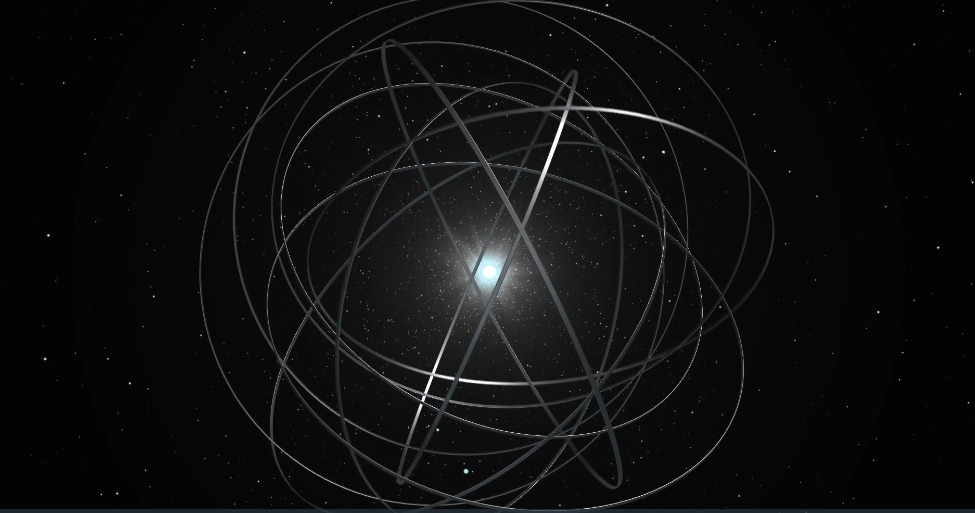
The idea of building a Dyson Sphere around the Sun sounds like something pulled straight out of a science fiction movie. This futuristic idea involves building a massive structure wrapped around a star to trap nearly all of its energy. Yet this concept has serious roots in real physics and has been studied by scientists for decades. The question is simple. So, could humanity actually build one around the Sun within our lifetime? The answer to this question says a lot about where our technology stands today and how far we still have to go.
What Exactly Is a Dyson Sphere?
A Dyson Sphere is a theoretical megastructure that surrounds a star to collect its energy output. Physicist Freeman Dyson proposed the concept in 1960 as a way for an advanced civilization to meet its growing power needs. Instead of relying on a planet’s limited resources, a civilization could tap directly into the power of its host star.
The Sun releases an enormous amount of energy every second. Only a tiny fraction of that reaches Earth. A Dyson Sphere would capture much more of it, turning a star into a nearly limitless power source. This is not a single solid shell as often shown in movies. Most scientists picture it as a swarm of solar collectors or satellites orbiting the Sun at different distances, working together to harvest energy.
Why Scientists Take This Seriously
This is not just a fun thought experiment. The Dyson Sphere sits at the center of the Kardashev Scale, a system used to measure how advanced a civilization is based on its energy use. A Type II civilization is defined as one that can harness the full output of its star. Right now, humanity sits well below Type I, meaning we cannot even use all the energy available on our own planet.
Astronomers have also used the Dyson Sphere concept in a very practical way. They search the sky for stars with strange dimming patterns, thinking these could be signs of a megastructure built by another civilization. So far, none of these searches have found solid proof of an artificial structure around a distant star. But the search itself shows how seriously scientists treat the idea.
The Scale of the Challenge
Building anything around the Sun means working on a scale that is almost impossible to picture. The Sun is about 1.3 million times the volume of Earth. To surround it, or even partially surround it with collectors, would require more raw material than exists on every planet, moon, and asteroid in our solar system combined.
Even a partial swarm of solar collectors, something scientists call a Dyson Swarm, would need trillions of individual units. Each one would need to be built, launched, and placed into a stable orbit around the Sun. The amount of metal, silicon, and other materials needed for this project goes far beyond anything humans have ever mined or manufactured.
Then there is the question of construction. We would need factories in space, robots capable of building and repairing structures without human supervision, and a supply chain that stretches across millions of kilometers. Nothing close to this exists today.
Could We Use Materials From Space Instead of Earth
One idea that makes a Dyson Sphere seem slightly less impossible is mining materials from space rather than Earth. Mercury, the closest planet to the Sun, contains a huge amount of usable metal and rock. Some researchers have suggested that taking apart a planet like Mercury piece by piece could supply enough raw material to build a partial swarm of solar collectors.
The asteroid belt is another possible source. It holds millions of rocky bodies rich in metals like iron and nickel. Mining these asteroids would avoid the problem of hauling materials up from Earth’s surface, which takes huge amounts of energy and money.
Still, even with these sources, the engineering problem remains massive. We would need automated mining operations, refineries in space, and assembly systems that can work without direct human control for decades or longer. None of this technology exists in a working form today.
What Would It Take in Terms of Time and Technology
Most serious estimates put the construction of even a partial Dyson Swarm at centuries into the future, not decades. Some scientists believe a Type I civilization status, where humanity fully uses the energy available on Earth, might be reached within one or two hundred years if technology keeps advancing at a fast pace.
Reaching Type II status, where a Dyson Sphere becomes possible, could take much longer. Some estimates suggest thousands of years based on current rates of technological growth. Others believe that breakthroughs in robotics, artificial intelligence, and space manufacturing could speed this up significantly.
The truth is nobody knows for certain. Technology can move in unpredictable ways. Fifty years ago, few people imagined reusable rockets landing themselves back on Earth. Yet here we are watching it happen. Progress in space technology sometimes moves faster than expected, but building something on the scale of a Dyson Sphere is still many technological generations away.
Small Steps We Are Already Taking
While a full Dyson Sphere remains far out of reach, humanity is already taking small steps in that general direction. Solar power satellites are being studied as a way to collect energy in space and beam it back to Earth. Companies and space agencies are developing better solar panel technology, more efficient rockets, and early concepts for space-based manufacturing.
Robotic mining missions to asteroids have already been carried out by space agencies like NASA and JAXA. These missions prove that removing material from space rocks is possible, even if only on a small scale for now. Every one of these projects builds toward the kind of technology and knowledge base that would eventually be needed for something as massive as a Dyson Sphere.
So Could We Build A Dyson Sphere in Our Lifetime
Based on where our technology stands today, the honest answer is no. We cannot mine planets or asteroids on the scale required. We do not have factories capable of building trillions of solar collectors. We do not have the propulsion or robotic systems needed to place and maintain a structure of this size around the Sun.
What we do have is a growing foundation. Reusable rockets, improving solar technology, early asteroid mining missions, and rapid advances in robotics and artificial intelligence are all pieces of a much larger puzzle. None of these pieces alone gets us close to a Dyson Sphere. Together, over a long enough time, they might.
A Dyson Sphere may not be something we build in our lifetime, but it is not pure fantasy either. It represents a real target for where advanced civilizations could be headed if survival and growth remain the goal. The question is not whether it is possible in theory. Physics does not rule it out. The real question is whether humanity has the patience and drive to keep building toward something so far beyond our current reach. If we ever do finish it, the civilization that lights up the entire solar system with a Dyson Sphere will look nothing like the one reading this article today.