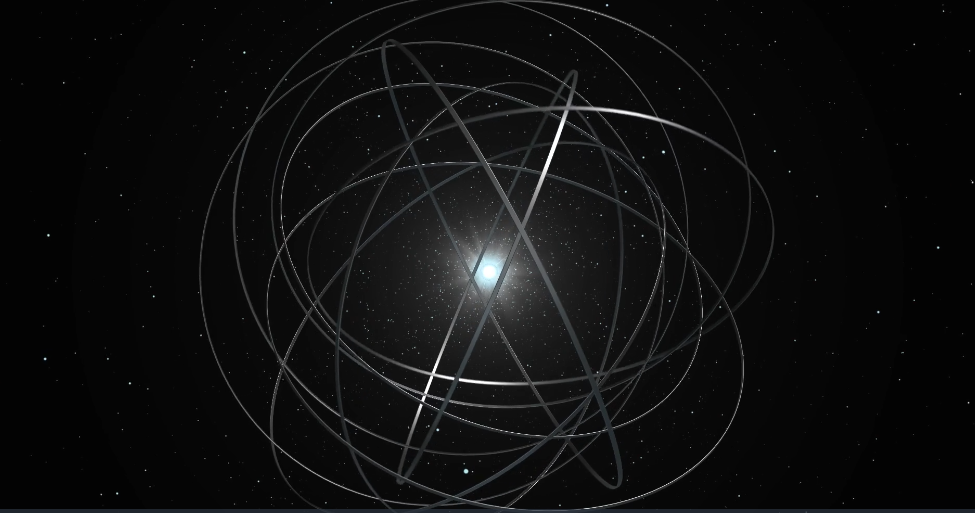


After Nearly 50 Years in Space, NASA’s Voyager 1 officially reached one light-day away from Earth
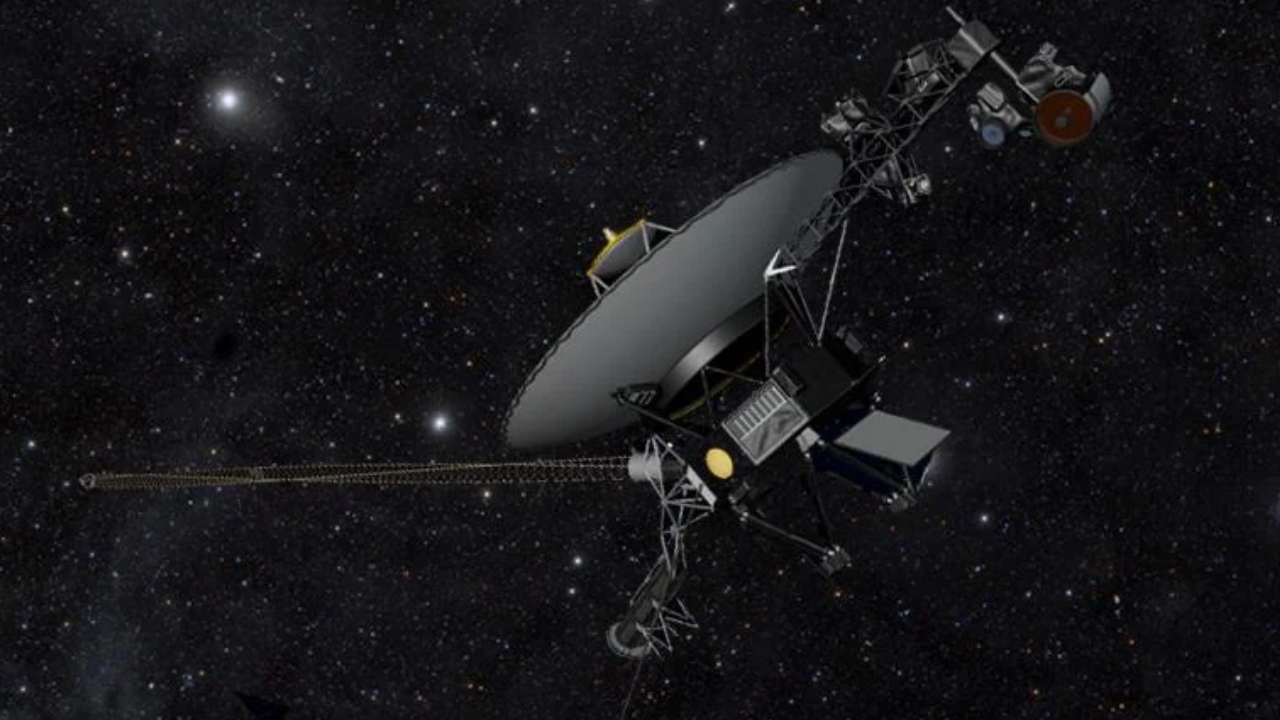
After travelling through deep space for almost five decades, NASA’s Voyager 1 spacecraft has achieved a milestone that puts the massive scale of the universe into perspective. On November 18, 2026, the spacecraft reached a distance of one light-day from Earth, becoming the first human-made object ever to travel that far away from our planet.
To understand how extraordinary this achievement is, consider this: even if you could send a message to Voyager 1 at the speed of light, it would still take an entire 24 hours to reach the spacecraft. And if Voyager 1 immediately sent a reply, another 24 hours would be needed for the response to return to Earth. That is quite impressive and shows how distance truly affects how we communicate with our space technologies in the future.
That means a simple question-and-answer exchange between NASA and its spacecraft could take approximately two days.
The milestone was reached at approximately 5:16 a.m. Eastern Time on November 18, according to NASA’s calculations. At that moment, Voyager 1 was approximately 25.9 billion kilometres (16.1 billion miles) away from Earth.
But how did a spacecraft launched almost 50 years ago manage to travel such an extraordinary distance?
A Journey That Began in 1977
Voyager 1 was launched by NASA on September 5, 1977, from Cape Canaveral, Florida, just 16 days after its twin spacecraft, Voyager 2.
The original mission was designed to explore the outer planets of our solar system, particularly Jupiter and Saturn. Scientists wanted to study these distant worlds, their moons, magnetic fields and atmospheric conditions using instruments that were advanced for their time.
Voyager 1 successfully flew past Jupiter in 1979, capturing detailed images of the giant planet and revealing important information about its atmosphere and moons. Among its remarkable discoveries was evidence of active volcanic activity on Io, one of Jupiter’s largest moons.
It then continued towards Saturn, reaching the planet in 1980. During its encounter, the spacecraft studied Saturn’s rings and its largest moon, Titan, providing scientists with valuable information about this fascinating world.
After completing its planetary mission, Voyager 1 continued travelling away from the Sun, beginning a journey into the largely unexplored region beyond the planets.
The First Human-Made Object to Enter Interstellar Space
Another major milestone came on August 25, 2012, when Voyager 1 crossed the heliopause, the boundary separating the Sun’s protective bubble of solar particles and magnetic fields from interstellar space.
This made it the first human-made spacecraft to enter interstellar space.
However, entering interstellar space does not mean Voyager 1 has completely left the solar system. The distant Oort Cloud, a vast region of icy objects surrounding the Sun, extends much farther out.
Nevertheless, Voyager 1 is now travelling through an environment that no other human-made spacecraft had previously explored directly.
Why One Light-Day Is Such a Big Deal
A light-day is not a measurement of time but a measurement of distance. It describes how far light travels in 24 hours.
Because light travels at approximately 299,792 kilometres per second, one light-day equals approximately 25.9 billion kilometres.
Voyager 1, meanwhile, travels at roughly 61,000 kilometres per hour. Although that is incredibly fast compared with anything humans normally experience on Earth, it is extremely slow compared with light.
This explains why the spacecraft needed 49 years, two months and 11 days to travel one light-day away from Earth.
The achievement also creates a major communication challenge for NASA. Radio signals sent to Voyager 1 now require approximately 24 hours to reach it, while its responses take another 24 hours to return.
Scientists must therefore plan communications carefully, knowing that they cannot receive immediate responses from their spacecraft.
A Spacecraft That Refuses to Retire
What makes Voyager 1 even more remarkable is that its original mission was never expected to last this long.
The spacecraft was designed using technology from the 1970s, yet it has continued transmitting scientific information for nearly half a century.
It is powered by a radioisotope thermoelectric generator, which converts heat from the natural radioactive decay of plutonium-238 into electricity.
As the available electrical power gradually decreases, NASA engineers have been switching off certain instruments and systems to conserve energy and extend the spacecraft’s operational life.
Despite these challenges, Voyager 1 continues to send information about the interstellar environment, including magnetic fields, charged particles and plasma waves.
It also carries the famous Golden Record, a special collection of sounds, music, images and greetings from Earth intended as a message to any intelligent civilisation that might encounter it in the distant future.
The record includes greetings in 55 languages, sounds of nature and selections of music representing different cultures.
What Happens Next?
Voyager 1 will continue moving deeper into interstellar space, becoming increasingly distant from Earth.
NASA expects its twin, Voyager 2, to reach the same one-light-day milestone in November 2035.
Although Voyager 1 may eventually lose the ability to communicate with Earth as its remaining power declines, the spacecraft will continue travelling through space for millions of years.
Think about that for a moment. A machine built by human beings in the 1970s, using technology that is now almost 50 years old, is currently travelling farther away from Earth than anything else we have ever created.
And somewhere in the darkness of interstellar space, it is still carrying a message from our planet.
Voyager 1 is a reminder that humanity’s exploration of the universe does not have to end at the boundaries of our own solar system.